Adsense

Friday, 29 July 2011

Cool Link: Teachers and Families

This website has info for preschool to grade 12.  While there is a membership option, there is still lots of free info on the site. Teachers and Families has monthly features and reading themes. They also have nursery rhymes, activities, and letters and numbers for preschoolers.  For K-12 they have study sites, word wonders, and recommended books. There's also a special section for parents such as those who have gifted children or children with special needs as well as some general parenting tips. 


Got an idea for a cool link?
Email me with your cool link, name, and website (if you have one) and I'll post it ASAP.

Teaching Resources: If you're looking for teaching resources, check out my top resources and my favourite TEFL Tips posts.

Thursday, 28 July 2011

Quick Tip: Grammar Game

This week's tip comes from Jabeen Mahmood who is teaching in Japan. 

Something that I like playing with my adult students who are learning all their tenses and grammar is that on the board we write a story together. I tell them that they have to use a certain number of adjectives, verbs, adverbs etc.  If they get stuck, I give them a hint: "OK, you need an adverb here, or you need an article"

I will ask them to choose a genre and imagine the story, then as the story progresses use more adjectives and conjunctions to develop the story.  The more the students play the better they get and the more they enjoy. I find it's a great help in improving their grammar and vocabulary and it's a fun.  We usually play this at the end of the lesson for about 10-15 minutes.

Another game I play with my high school students is similar to the above game but I write a few words on the board first.  So I'll write a noun, a verb and another noun on the board and then ask the students to complete the sentence, using an article, verb etc.

Got an idea for a quick tip?
Email me with your quick tip, name, and website (if you have one) and I'll post it ASAP.

Teaching Resources: If you're looking for teaching resources, check out my top resources and my favourite TEFL Tips posts.

Tuesday, 26 July 2011

Cool Link: Education World

Education World is awesome.  While not specifically geared towards TEFL they still have great material for TEFL, other languages, and subject teachers. If you're teaching subject courses, then you'll be able to find a lot at Education World. Ditto goes for those teaching in international schools.


They've got info about professional development, help for administrators, lesson plans, info for teachers, worksheets, and lots more. You could easily spend a couple hours looking through all the resources they have.

Got an idea for a cool link?
Email me with your cool link, name, and website (if you have one) and I'll post it ASAP.

Teaching Resources: If you're looking for teaching resources, check out my top resources and my favourite TEFL Tips posts.

Monday, 25 July 2011

Cool Link: Teach Children ESL


If you're one of the many teachers who works with children, you'll love this site. Teach Children ESL has worksheets, flashcards, games, songs, and a mixed lot section. All free! They also have links to other useful websites geared towards teaching children English. So if you're teaching kids, be sure to check out Teach Children ESL.


Got an idea for a cool link?
Email me with your cool link, name, and website (if you have one) and I'll post it ASAP.

Teaching Resources: If you're looking for teaching resources, check out my top resources and my favourite TEFL Tips posts.

Sunday, 24 July 2011

Hot Topic: Cambridge Monopoly

Cambridge has given us a variety of exams for students, such as the FCE and CAE as well as courses for teachers, such as the celta and delta. However, they seem to have a bit of a monopoly over TEFL and also seem to favour their own teachers.

Take the celta, anyone can enroll in one month intensive course. However, the Delta is more difficult since many of the centres require you to be a teacher at one of their institutes in order to enroll in the two month intensive version.

Sure, there's the distance delta, which can be done in modules, but it requires a lot more organising and you might have to pay for a local tutor (but they don't have to be a native speaker) as well.

What do you think?
Does Cambridge have too much of a monopoly over TEFL?  Do you have a celta or a delta?

Got an idea for a hot topic?

Email me with your hot topic, name, and website (if you have one) and I'll post it ASAP.

Teaching Resources: If you're looking for teaching resources, check out my top resources and my favourite TEFL Tips posts.

Saturday, 23 July 2011

The Language Hacking Guide

Stop wishing you knew another another language and do something about it. Benny the Irish Polyglot has created a language learning technique that'll decrease the time you need to study while increasing your knowledge of the language.

Need more proof?  He speaks 8 languages. Take a look at The Language Hacking Guide by Benny, the owner of Fluent in 3 Months.

So what does he say about learning a language?
  • Yon't need to spend years studying grammar, or expensive, complicated software, or a “magic pill”.
  • You just need to speak it. 
  • Speak it regularly, speak it confidently, and speak it immediately. 
  • The more you speak, the quicker you will improve.
If you're serious about learning another langauge, then check out The Language Hacking Guide right now!

Teaching Resources: If you're looking for teaching resources, check out my top resources and my favourite TEFL Tips posts.

Thursday, 21 July 2011

ESL Educators Blog Carnival: July 2011, Culture

The topic of July's ESL Educators Blog Carnival is culture. You can read what 3 different teachers think on Ted's TEFL Newbie.

Teaching Resources: If you're looking for teaching resources, check out my top resources and my favourite TEFL Tips posts.

Wednesday, 20 July 2011

Quick Tip: Ask for Feedback

As teachers it's pretty easy for us to start thinking that we know it all. Although there are some employers that observe teachers or have students give teacher evaluations at the end of a course, it's not enough. I know it can be hard for you and your students but you should try to ask for feedback each class or at least once a week.

It doesn't have to be a big deal. Simply asking students if they liked the lesson or not is a good start.You can have them say their favourite and least favourite part of the lesson. It's hard to listen to this, but it's constructive criticism, it'll make learning English fun, and it'll make you a better teacher.

However, many students are afraid to tell a teacher what they didn't like. You could help them by making it anonymous. A couple minutes before the end of class, you could leave the room and ask them to write two things they liked about the class and two things they didn't like about the class. Remind them not to put their names on the papers. Have one student collect the papers and stick them in an envelope. They can even seal the envelope if they want. Then finish the class.

When you get back home or to your office you can read what they wrote. It's awkward and can be hard to hear students say that they didn't like something you did, especially if you spent a lot of time planning that activity. However, by doing this, you will change the way you teach and make your classes more student centred and ultimately better for both you and your students.

Got an idea for a quick tip?
Email me with your quick tip, name, and website (if you have one) and I'll post it ASAP.

Teaching Resources: If you're looking for teaching resources, check out my top resources and my favourite TEFL Tips posts.

Tuesday, 19 July 2011

Cool Link: Boggle's World

Boggle's World has been a long time favourite among TEFL teachers. You can find just about everything you need here from teaching English to kids to adults.

They have jobs, worksheets, songs, verbs, writing, the alphabet, Science English, Business English, English for Adults, articles about teaching, lesson plans, holiday worksheet, and flashcards.

The lesson plans and worksheets are fantastic and are organised by topics, such as giving directions or writing. The new phonic worksheets are great if you're teaching kids.

Got an idea for a cool link?
Email me with your cool link, name, and website (if you have one) and I'll post it ASAP.

Teaching Resources: If you're looking for teaching resources, check out my top resources and my favourite TEFL Tips posts.

Sunday, 17 July 2011

Hot Topic: Online Degrees

I remember seeing adverts in my dad's comic books from the 60s for correspondent courses to get high school diplomas. They said that more job opportunities would open up if you had a high school diploma and doing it through the mail would allow you to continue to concentrate on your family and current job.

Times have changed and most people have their high school diploma. Others have their bachelor's degree as well. Now people are turning to online education (aka: distance degrees) for their masters degree.

It only makes sense. Tuition back in the 60s pales to what costs are nowadays and few people can afford to take a year or two off just to study. They'd not only lose income, but also a couple years of work experience. In addition, the internet has made things much easier than they were before.

People have used the internet to communicate, learn another language, and get information, so why not use it to study? You can can chat, participate in discussions, use Blackboard software, watch videos, listen to podcasts, and may be able to watch live lectures.

Few people are on the fence when it comes to online education. Some schools have blended learning degrees, where most of it is done online, but you meet once or twice a year on campus as well. Usually people are strongly in favour of it, or strongly against it.  Below you can find reasons for both.


For
Those in favour of distance education have a couple things to say. First, they say that it's more difficult to study this way and thus makes you a better student. Second, they say being able to work and study at the same time allows you to put theory into practice right away. Lastly, they say it allows them to interact with people all over the world in a variety of teaching situations and therefore allows them to broaden their perspectives.

Against
Those against distance education think much differently. First, they say that there are too many degree mills out there willing to give you a degree if you pay for it. Second, they say that traditional in-class lectures work much better than those online. Lastly, they think that distance education providers are lowering their standards and accepting just about anyone, even those who don't know English very well.

Conclusion
There are pros and cons to online education.  One con is that not all employers will accept online degrees.  The Middle East is a perfect example.  The Ministry of Education (K-12) doesn't, but the Ministry of Higher Education does.  It's also up to the employer.  Even if the Ministry of Higher Education accepts it, it doesn't mean that all universities have to accept online degrees.  However, the strongest pro is that it can be done anywhere in the world and you don't have to take time off work to do so.


What do you think?
Are online degrees good or bad?  Do you have one?  Would you get a masters online?

Got an idea for a hot topic?

Email me with your hot topic idea, name, and website (if you have one) and I'll post it ASAP.

Teaching Resources: If you're looking for teaching resources, check out my top resources and my favourite TEFL Tips posts.

Friday, 15 July 2011

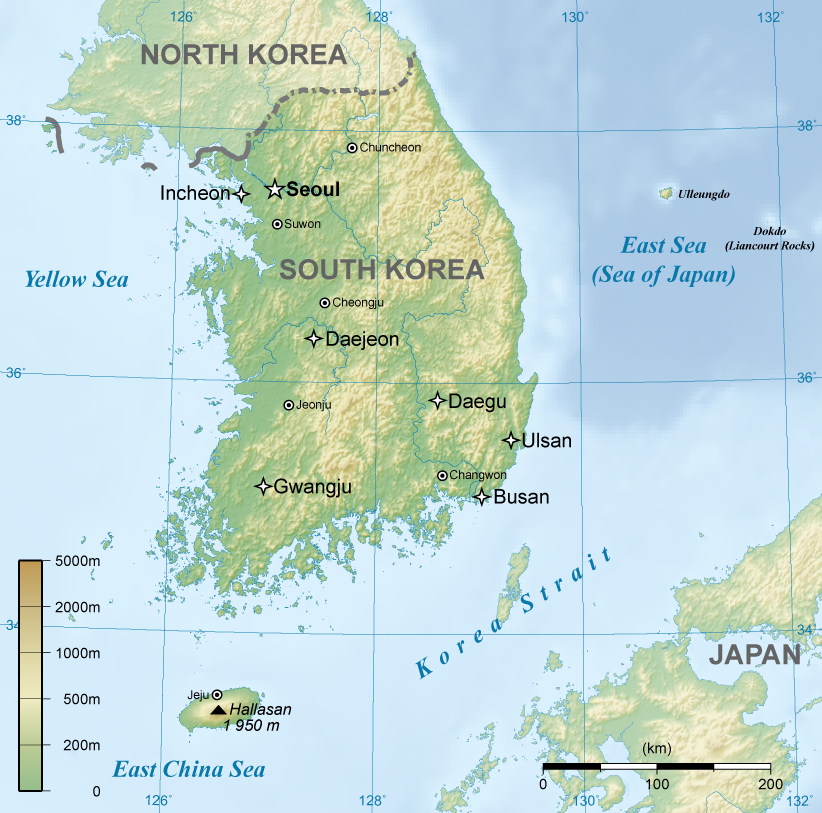
Korean F visas options without getting married


F2 and F5 visas are fantastic because they aren't tied to your employer. Traditionally they were only available to those married to Koreans. However, now there are 3 ways to get an F2 and an F5 even if you're not married to a Korean. You can find basic info below and read more in my guest post at Chris in South Korea.

Once you get your F visa you could check out AFEK (started by Mike Yates aka Scouse Mouse on Dave's ESL Cafe and highly supported by T-J. Though AFEK has gotten a bad rap since they started due to a fight with ATEK. The owner has banned most of the users, threatened several prominent community members, and generally just killed the site.) or Geoju (started by crossmr on Dave's ESL Cafe and seems to be a much better group) or ExpatHell (which has an invitation-only forum).

Index
1. F2-S / F2-7
2. F2-99
3. F5-A
4. Changing from a F2-S / F2-99 to a F5-A
5. Lawyers

1. F2-S / F2-7 is available via points. You need 80 out of 120. You can find a chart at Korea 4 Expats and info at Dave's ESL Cafe.

It seems to be getting harder and harder, look at what pacificman (a D-8 visa holder) went through.

On Dave's ESL Cafe a couple people have gotten this visa:
  • Nick70100 (October 2011)
  • stoned (June 2012, but was only given 1 year rather than 3)
  • Son Deureo! (June 2012)
  • Lolimahro (July 2012)
  • whiteshoes (October 2012)
  • ntwrightmom (applied August 2012, waiting to find out)
  • semphoon (applied September 2012, waiting to find out)
 Here's the maximum points

  • Age: 25 points
  • Studies: 35 points
  • Korean ability: 20 points
  • Income: 10 points
  • KIIP: 10 points
  • Studies done in Korea: 10 points
  • Volunteer work in Korea: 5 points You’ll need a 봉사활동인증서 /a 봉사활동확인서
  • Overseas Work as a Specialist: 5 point
Supposedly your dependents will also get an F2 visa. See this thread for more info. As well as immigration's website, which says 본인, 배우자 및 그 미성년 자녀에게 거주자격(F-2)을 부여하여 기존의 체류자격에 관계없이 자유로운 취업활동이 보장되며, 1회 부여 체류기간의 상한이 3년으로 확대됩니다. That says pretty clearly that you, your spouse, and your dependent children will all get F-2s.


2. F2-99 is a Long-term Sojourner (Visit Hi Korea for more info). Welshguy got this visa in January 2011.
  • There's info on this post and this post on Dave's.
  • You'll need to be on the same visa (i.e. no visa runs or changing from an E2 to an E1) and have 5 years in Korea as an E1-E5, E7 visa. Some people have said that time spent out of the country does NOT count towards the time requirement.
  • No longer required as of July 2012: A Korean has to sponsor you by filling out 신원보증서.  The higher up they are (ex. doctor, lawyer, government official, CEO, professor, administrator, etc) the better is it.
  • You need to write a 4 page essay on how you contributed to Korea in the past and how you'll contribute in the future. Get it translated into Korean.
  • Some people have said they had to bring tax forms to prove that they paid taxes in Korea.
  • Korean is now a requirement: you must have at least TOPIK level 2.
  • Income is now a requirement: you must have at least 30 million in the bank / or down on an apartment OR make at least 36 million a year legally. This amount may change as it is 1.5 times the GNI of Korea.
  • Any diplomas, certificates, or degrees that you have you should bring.  Master’s degrees, TEFL certificates, Korean language certificates, etc would work. People have said this has helped.

3. F5-A is permanent residence but it's hard to go straight to this visa. Some people get the F2-S or F2-99 first. Also check Hi Korea and Dave's ESL Cafe.

  • Time requirements are the same as the F2-99,
  • TOPIK level 2 (used to be level 5).
  • Earn twice as much as Korea's GNI (used to be three times as much). In 2012 the requirement was 45 million.

4. Changing from a F2-S / F2-99 to a F5-A

Option 1: Wait 3 years and apply.

Option 2: You can apply for the F5 immediately after you get the F2-99 if you fulfill two requirements.
  • Prove that you have earned what an average Korean does (i.e., the Gross National Income (GNI). In 2010 it was about 24 million won). You used to need three times the GNI.
  • Pass TOPIK level 2. You used to need TOPIK level 5.

On the English version it has the old information. However, the Korean version has the new information. You can see the Korean version through Welshguy’s post.


5. Lawyers
You might also want to consider getting a lawyer. ATEK has a huge list of lawyers on their Legal Resource page. A friend of mine also recommended this one: Union TNC, Seoul, Jongro-gu, kyong eun dong, SK Building, 1st floor, Office 113. (Its by Anguk Station).Tel: 02-318-5274; Email:uniontnc@gmail.com

Updated: 5 October 2012

Teaching Resources: If you're looking for teaching resources, check out my top resources and my favourite TEFL Tips posts.

Saturday, 9 July 2011

New TEFL Tips Design

TEFL Tips is finally a dot com! The new address is http://www.tefl-tips.com . Be sure to update your bookmarks!

Final exams are upon us and vacation is just around the corner. Every year seems to get busier than the last. I finished my MPET (Master in Professional Education and Training) from Deakin University, Australia and just in time since our baby girl was born 3 weeks early in mid October. My goal for 2012 is to publish about 25 posts a month; there are weekly and monthly topics, which you can find below. 


About TEFL Tips
TEFL Tips is designed to help ESL and EFL newbies and olbies alike. Whether you teach ESL, EFL, EAP, ESP, the 4 skills, examp prep, Business English, young learners, teenagers, or adults, you'll find tons of info to help you out. Here's an example of what can be found at TEFL Tips:


Weekly Posts: If you have an idea for a Hot Topic, Cool Link, Quick Tip, or Job Site email me and be sure to let me know your name and website (if you have one).
  • A Hot Topic in teaching
  • A Cool Link to a neat website (published twice a week)
  • A Quick Tip to help you become a better teacher
  • A Job Site that tells you the best places to look for TESL and TEFL jobs


Monthly Posts

New Design
I've been working on TEFL Tips for the past couple of weeks trying to get it more organised and easier to navigate. Here are the 10 changes I've made.


1. EBOOKS: They're at the top of the page.

2. PAGES: They're at the top of the site and organised by subject.
  • About: It has an introduction to TEFL Tips. There's also contact information on this page.  Whether you have questions, comments, or suggestions for articles or posts, are interested in being a guest blogger, or want advertising rates, feel free to contact me.
  • TEFL Basics: Heaps of information for those starting out, such as taking a TEFL course and writing a CV.
  • Career: Information for those wanting to make a career out of teaching, such as getting masters degree and finding university jobs.
  • Classroom: Tips for the classroom, such as teaching the 4 skills and classroom management.
  • Money: How to make extra money, such as teaching private students and negotiating your contract.
  • Where to go: Information about TEFLing around the world..
  • ebooks: How to teach the 4 skills, grammar, young learners, and a guide to Peru.

3. POLL: On the left side there's a monthly poll about teaching.  The results will be published every 7th of each month.

4. SHARE BUTTONS: Facebook, Reddit, Tweet, and other share buttons can be found at the top and bottom of each post. 

5. TAGS: They're on the left and should help you find exactly what you're looking for.

6. SUGGESTED ARTICLES: At the bottom of each post is a list of 5 articles that might interest you.

7. MORE ARTICLES: There will be weekly Hot Topics, Cool Links, and Quick Tips. There will also be 3 special articles each month.  There will be a main article coming out the 1st of every month. Poll results will be published on the 7th. On the 21st there will be a link to the ESL Carnival, which is a monthly compilation of 7 articles by 7 different authors all about topics related to teaching. 

8. EASIER TO READ: From 3 columns to 2 columns. And a "Read more" link at the bottom of each post to help you skim down the blog and find the articles that interest you.  You can also find a search function in the left column.

9. FEWER ADVERTS: Many adverts have been taken down and the ones left up are ones that I personally believe have something good to offer.

10. UPDATED POSTS: Many old posts have been updated to ensure that you have the lastest info.

Hope you enjoy the new look!
Sharon

Teaching Resources: If you're looking for teaching resources, check out my top resources and my favourite TEFL Tips posts.

Sunday, 3 July 2011

Teaching English to Young Learners ebook

Teaching English to Young Learners can very rewarding. Most teachers love teaching the young children because they learn so fast. They're like little sponges.

If you're going to teach young learners, then you need to know how to teach them. From lesson plans and activities to dealing with discipline problems, this ebook has it all.

Here’s what’s on offer:
  • Heaps of lessons and activities
  • Advice for teaching young learners
  • How age impacts language learning
  • How boys and girls learn and behave differently
  • How to work with not against students.
  • Behavior Management – Made Easy!
  • Assessing your young learners' skills and what to do about it
  • How to work cooperatively and positively with parents, school administrators and co-teachers

Best of All . . .
  • Lots of lesson plans and activities with suggested changes for different age groups
  • Popular songs and games that are easy for kids to learn

Plus . . .
  • THREE PAGES of links to resources where you can download FREE young learner resources, lessons, activities, games and much more.

How much is it?
Only US$9.95. So what are you waiting for? Get Teaching English to Young Learners today!

Teaching Resources: If you're looking for teaching resources, check out my top resources and my favourite TEFL Tips posts.

Privacy Policy and FTC Disclosure

Please read TEFL Tips' Privacy Policy and FTC Disclosure.
Related Posts Plugin for WordPress, Blogger... Paperblog
Google Analytics Alternative Google Analytics Alternative